Wainscoting vs. Board and Batten: Which Is Right for Your Home?
By Larry Maiorano, Owner of LM Legacy Remodeling
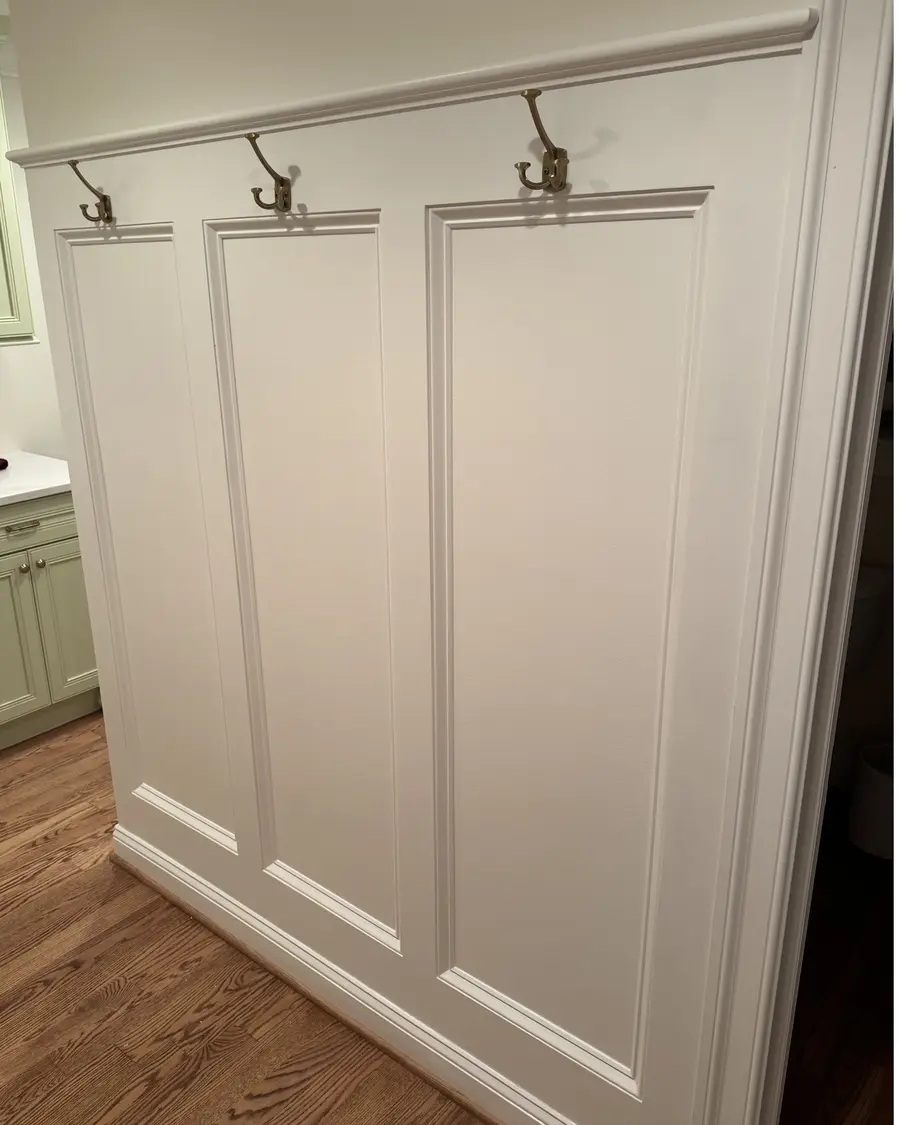
Paneled wainscoting with cap rail and brass coat hooks by LM Legacy Remodeling
These two terms get used interchangeably, but they're different treatments with different personalities, and choosing between them is mostly about the style of your home and the job you want the wall to do. Here's how I walk clients through it.
What Wainscoting Actually Is
Wainscoting is paneling applied to the lower portion of a wall, capped with a chair rail. The classic versions are raised panel (the formal, traditional look), flat or recessed panel (cleaner, works in both traditional and transitional homes), and picture frame wainscoting, which uses molding boxes applied directly to the wall and delivers most of the panel look with a lighter touch. Beadboard is the casual cousin, at home in mudrooms, baths, and cottage-style spaces.
What Board and Batten Is
Board and batten is a grid of flat vertical boards (battens) over a smooth field, usually run taller than traditional wainscoting, often to two-thirds of the wall height or higher, with a deeper top cap that can double as a ledge. It has a more casual, modern farmhouse look than panel wainscoting, and it's become a popular treatment for entryways, mudrooms, bedroom feature walls, and stair walls.
How to Choose
- Formal dining or living room in a traditional home: Panel or picture frame wainscoting. It matches the architecture of the colonials and center-hall homes all over the Main Line.
- Entryway, hallway, or mudroom: Board and batten earns its keep here. It's durable, it hides wall scuffs, and the taller height anchors a busy space.
- Bedroom accent wall: Either works; board and batten leans modern, picture frame molding leans classic. Paint color does a lot of the deciding.
- Bathrooms: Beadboard or flat-panel wainscoting, with materials suited to bathroom humidity.
The Detail That Matters Either Way: Layout
Whichever direction you go, the project succeeds or fails on layout. Box widths and batten spacing need to be worked out for your wall before anything gets cut. The layout should be centered and balanced around windows, doors, and outlets. That layout conversation is part of every estimate I do, because changing your mind on paper is free, and changing it after install is not.
See examples and details on our wainscoting installation page and our accent wall page, or take a look at recent work in Bryn Mawr and Newtown Square.
Thinking About a Project Like This?
Free estimates directly with the owner, who works with you from the first measurement to the final walkthrough.
📞 Call 484-995-8599 💬 Text Photos of Your Space